Horror in 2026 (So Far)
A look through the start of 2026 in the world of horror literature.
I have been a little slow starting this year’s books articles, and I hope to make them a little more consistent than in 2025, to include both more horror articles as well as comics and the best non-fiction. In doing so, I wanted to draw out some common themes of each entry since there tends to be a kind of shared Zeitgeist in what is released. Horror embodies this perhaps more than other genres since it uses established tropes that are easily legible to readers. What those tropes are is a type of commentary on the thinking of the audience and, ultimately, the conditions that drove those images into the collective unconscious. It’s not surprising to see the continued acceleration of apocalyptic science fiction or a particularly nihilist trend in horror fiction, as well as the genre world almost entirely captured by grief narratives (or with various versions of scary mushrooms as our antagonists).
Before we get started I want to say that amongst my most anticipated books of the year is Ruiner, the first of a new science fiction series by Lara Messersmith-Glavin and published by AK Press that I have picked up but have not gotten the chance to devour. Similarly, high on my list from 2025 is The Immortal Choir Holds Every Voice, the latest Danielle Cain novel by Margaret Killjoy and her first in many years that has now been moved over to her own publishing collective, Strangers in a Tangled Wilderness.
The beginning of any year is mostly reading earlier books, but I started with both an established book from 2022 I missed and a title that, while fitting comfortably in the genre world really is not horror (despite the fact that I picked up off the new books table at Midslumber Media, the new horror store in Portland).
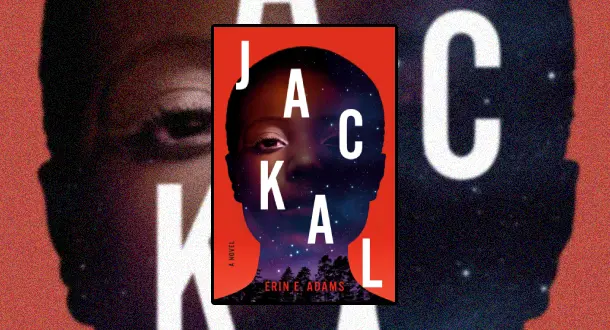
Jackal is the first book I’ve read by Erin E. Adams, who at the time I purchased this (in part because of its stunning cover) is promoting her most recent historical fiction novel. The book is structured like a mystery with a woman returning to her Appalachian hometown to attend her childhood best friend’s wedding. The situation is complicated: she is one of the only Black residents to come from her town, but her mom is a physician of Haitian descent and therefore she lives in a white neighborhood and attended a largely white school. Her best friend, a white girl she graduated with, had a baby with a Black partner, something her family reacted to with rage before acceptance, and now they are finally getting married. Their daughter, one who is like a niece to our protagonist, goes missing at the reception, a re-enactment of something that has happened over and over in this town: Black girls disappear.
Subscribe to the newsletter
Note: Light Spoilers for Jackal and Murder Bimbo (nothing major)
Jackal is complicated, there’s no other way to say it, and so are my feelings about it. On the one hand, the characterization is well poised, the writing sharp and clean. But the book rests on a couple of flaws that were hard to overlook. Its length (nearly 450 pages) does not always feel earned, and the supernaturalism that takes over at the end of the book feels particularly forced. There is a fear that sits underneath the story and it is about the potential presence of a white supremacist serial killer. This is actually a theme many people grew up with.
Between 1979 and 1981 a series of murders of at least 28 Black children and young adults in Atlanta became a nationwide story. The police profiled a standard serial killer, but many Black community leaders already believed they knew who did it: the Ku Klux Klan. The city had a long history of racial terror where Klan murders were often explained by anything other than the white community leaders who were hiding under their hoods. The problem was, however, that this explanation did not seem to fit the evidence, and while there certainly have been white supremacist serial killers, which was not this situation, and more traditional pathologies were to blame (the person ultimately convicted was a Black Atlanta resident). White supremacist serial killers who have existed were often explicitly political and engaged in rageful spree murders, not so much the way the killings in Atlanta happened or in the quasi-spiritualized and compulsive fashion in which the murders in Jackal are carried out. The problem is not the racialization and invisibilization of the Black characters in the story, that is its strongest feature of Adams’s writing, but instead the assumptions about how the killings would be carried out and the underlying motivations of those involved. This was overly complicated and pulled out of lurid fantasy rather than reality, and while that is perfectly fine for a horror novel it clashes with the sheer realism of the town’s history and the racial violence that permeates the rest of the novel. What we end up with is a strange vision of what white nationalist violence looks like that forces the book’s already slow progression to break down.
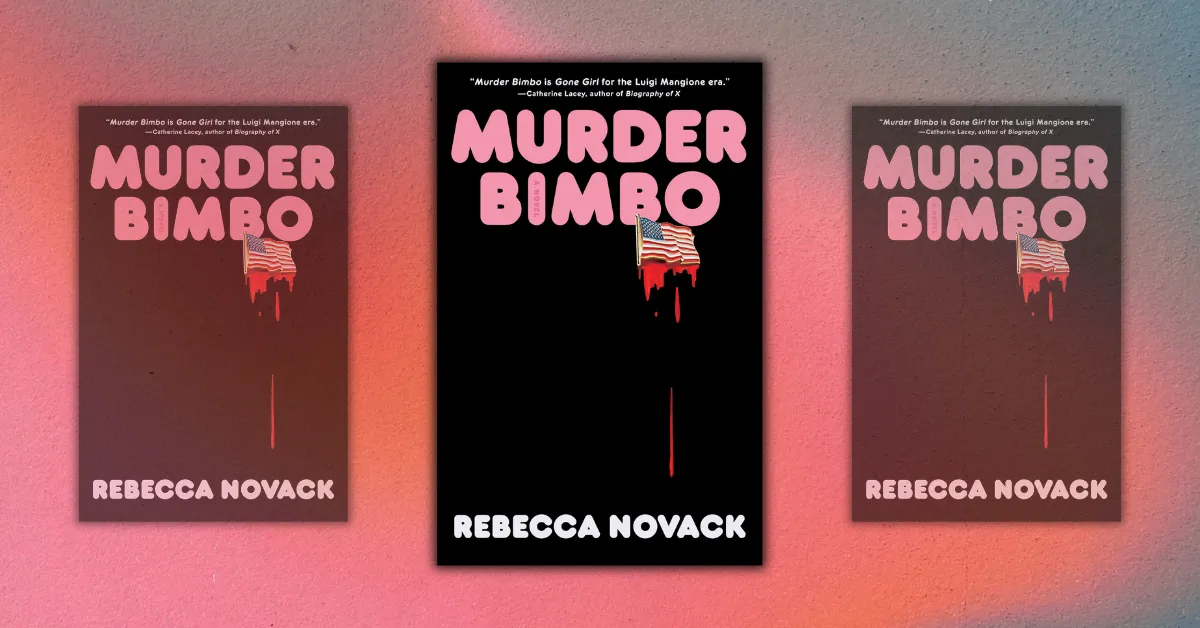
A similar problem afflicted Murder Bimbo, which is not a horror novel but sits horror adjacent as a genre thriller with outsized personality. The book is ostensibly a series of letters to three different audiences from a woman explaining why and how she murdered a far-right political figure. The woman’s story evolves over time, but she is a sex worker, a lesbian, sometimes a political radical, sometimes adept at performing straightness, at times convinced by deranged double agents that she is working for the government, and always a tool of the mutual interests of white supremacists. The book is a blast, start to finish, and there is a certain relatability to the discussions of political violence given the kind of decade we are living through.
But one of the problems comes with its characterization of white nationalists. The first section closes with the government agents who had hired her to assassinate a particular political figure revealed to be an insurrectionary white supremacist cell. They have huge budgets, are funded by someone, and are targeting this figure because he is not quite the white savior he claims to be but actually a tool for Jewish tech billionaires. Once they are revealed, those same white supremacists, the ones flush with cash and with interpersonal skills that keep them cloaked and hidden, are also rife with neo-Nazi symbols, the number 88 (for ‘Hail Hitler’) emblazoned throughout, and otherwise internet-inflected accelerationist imagery. The reality is that the book collapses different white supremacist communities into one that bears no resemblance to any of them, and then places them at the heart of power in ways these figures could never reach.
There are currently white supremacists in the government, including those who likely come out of explicit neo-Nazi spaces, but they operate with the kind of calm, collected self-awareness that keeps them from behaving like anyone in these pages. While it makes sense, given the shifting characterizations, for these people to behave in unreal ways, there seems to be an assessment by the author that there are literally neo-Nazi gang members running multi-million dollar missions or operating inside the government in ways that are more than unlikely. Instead, this creates a false perception of what white supremacy looks like, what its symbols and reference points are, and what it would take to root them out. This makes these sections feel sloppy and a bit like a liberal gothic fantasy, and while careful attention to detail pervades the rest of the prose, there is almost a sense that the same precision is unnecessary here. It is, and defining it is part of taking the threat of white insurrectionary violence seriously and differentiating it from the much deeper rooted white power of colonialism and empire.
I have seen some online discourse about Jackal in particular (Murder Bimbo is new to this year and so less has been said) that contains some criticism for its racial commentary. A significant portion of that reeks of very online anti-DEI racist blog babble, something that is obvious from the fact that Jackal is a favorite of both critics and readers and so the level of vitriol it receives from some corners is obviously unfounded. Adams is a particularly skilled prose writer whose discussions of the personalization of racial othering transmutes the boundaries that identity can build for readers: she orchestrates an intangible act of transference that makes common lived experience land with aplomb. This is a common (largely white) talking point on things like BookTok or Goodreads, and, as with anything, there are examples of anti-racist commentary being integrated poorly into the story.
Just before this I attempted to read I’ll Make a Spectacle of You, a Dark Academia fantasy book that runs a parallel historical narrative where a free Black woman in the American South discusses how she exists “at multiple axes of oppression” and likewise transports terms and phrases from 21st century academia into a mid-nineteenth century journal entry. This is the kind of thing that so often fails to translate ideas into literary prose, which should be made visible in the actual lived experience of our characters. Similarly, the otherwise brilliant 2022 novel The Devil Takes You Home by Gabino Iglesias, which is a rapidly spiraling story about trauma and the crushing loss of the self that comes from trauma and the structural inequalities that sit underneath it. But, at rather random moments in the text, we have these snapshots where the cartel-gunman stops and talks about white privilege in ways that completely remove us from their characterization and come across less astute and powerful as social commentary than the novel’s entire vision as a whole. It’s not that less of this would work better, but to actually have more and be embedded into the language and heart of the characters who are shepherding us through the story rather than to project buzzwords onto them.
Adams actually handles the discussions of both historical trauma and extant white supremacy with a kind of elegance, and Murder Bimbo does the same (which is likely to make it on my “best of” list), but the specifics of white nationalism, a particular force with its own history and patterns of violence, are different. The flattening of white nationalism is part of how it becomes confused with structural factors, where its contours are mistaken and its exceptionality is erased, thus creating not just a clunky plot hole but an overall cultural misunderstanding of the phenomenon. This has happened across liberal (and some radical) discourse where violent white nationalism has blended into the rest of politics (it has), and the right-wing political and media sphere has allowed these mistakes to bolster their argument that all claims of white supremacy are hyperbole at best or tactical untruths at worst.
So while I think some of the discussions of white nationalism in the book do fall flat for me by representing figments rather than their real threat, I don’t know that this would land with every reader since the violence of white supremacy extends long past its point of contact. What I mean is that these sorts of characterizations, the hiddenness that our society allows for neo-Nazis and other fascist vigilantes, and the confused way in which they appear means that they are ever-present, always at the back of our minds and never truly become fallible people with names and addresses. In both books they operate that way, the justification for an occult killer in one case and as a strange bedfellow in another. In this way these characterizations work since they are the ones many people live with in times of heightened fear and crisis. Part of why Murder Bimbo works as well as it does is its self-aware discussion is directed back on our unreliable narrator, so when she partners with neo-Nazis or changes her story we know that we aren’t playing by the rules.
Ultimately, I liked Murder Bimbo more than Jackal, though this was mostly because Jackal slows down a little in the middle and long bits of dialogue felt awkward and forced, melodrama for the reader. That said, the deep folk horror element and the way that the town’s racial history was intertwined created a kind of mythic commentary I did greatly appreciate, which is why I can comfortably recommend both.
Subscribe to the newsletter
Wretch: or, The Unbecoming of Porcelain Khaw
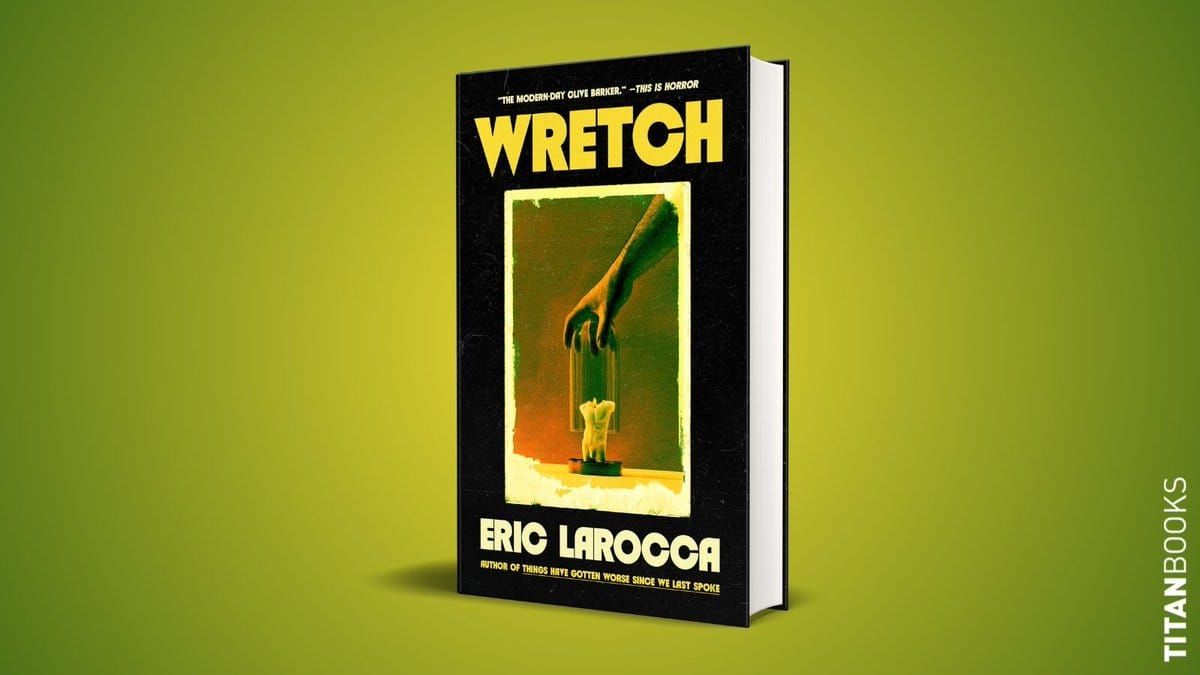
One of the most anticipated novels of the year was Wretch: or, The Unbecoming of Porcelain Khaw, Eric LaRocca’s fourth novel and the first of two that will come out this year (the second being the second volume of the Burnt Sparrow series, We Turn Gruesome At Night). LaRocca is fairly called the latest embodiment of Clive Barker, and his grotesqueries have become an obsession of horror readers ever since his novella Things Have Gotten Worse Since We Last Spoke (which he wrote in five days) went viral and launched him to stardom. I had forgotten its release, and when I saw it on Audible on my way to the gym I made a quick detour to Powell’s to buy it so I could read it over Shabbat. As per usual for LaRocca, the book starts with a man mourning his dead husband and watching his life spiral. Grief is one of the most common horror themes, terror is often an egregore loss creates, and it works well, particularly with the cosmic horror that LaRocca writes. The man has an ex-wife who still loves him and a son he cares for but can’t connect with, but his obsession with his now-dead lover overshadows everything. He joins a group whose job it is to take photos that could capture the faces of their dearly departed, but when that’s not enough he is taken to a figure, one embodied both in internet rumor and waking dreams, who can briefly return what you’ve lost.
The book was a solid, quick read, but not entirely as well constructed or tactile as Everything the Darkness Eats or At Dark, I Become Loathsome, though in some ways it is perhaps even more responsible in how it handles the miasma of suffering. All three books are about the loss of a spouse, at least at some point, but Wretch meanders a bit toward the middle, leaving the end rushed without as much punch. This may be because the book is mostly about the internal monologue of our narrator, the lies and half truths he tells himself and the loneliness he projects all around him. This may be why he is so instantly relatable: his pain is his ghost, and he is ours, the worst version of ourselves we know too well. I would still handily recommend Wretch even if it may not make it on a top ten list like the others did.
The Midnight Muse
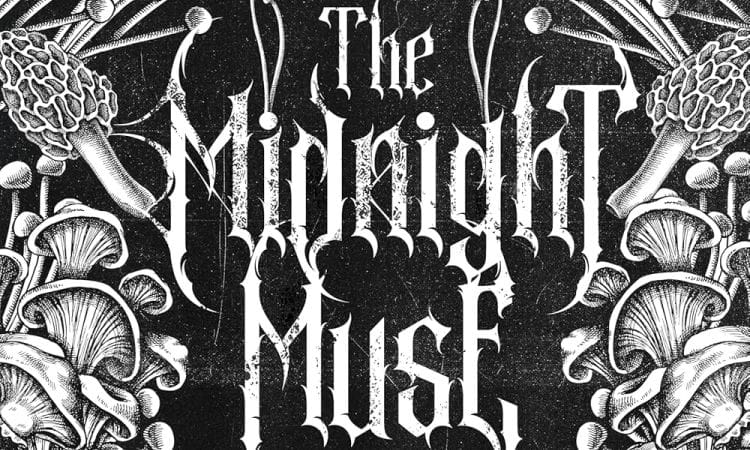
The Midnight Muse was one of the first actual 2026 released books I read this year (the first quarter is dominated by everything missed in 2025) and hit my list since it was from Clash, the small but increasingly influential literary horror publisher. The book tells a fragmented story, some parts in the past, some in the present, and others from news clips and forum posts, a scattered format I’ve always enjoyed since it mimics my own kind of frenetic internet brain. A metal band has a performance where an electrical malfunction costs the lives of several fans. The lead singer heads into the woods for a retreat and disappears, and after a full year the rest of the band heads to the same cabin in the Umpqua National Forest, a few hours south of Portland, Oregon, to discuss the band’s future, or to look for her, depending on which member you speak to. Things rapidly devolve and while I don’t want to give away the plot, it’s easier for the reader to assume that it involves a carnivorous mushroom entity since it’s on the entirety of the cover design.
The novel does overstay its welcome a bit and has so many plot turns that it sometimes loses itself right after it establishes a structure of incentives and a sense of the world. Government secrets, transspiritual entities, the power of music (or metal, I guess) are all there, and a little trimming would have benefited it. But it was altogether satisfying as well and a nice entry into the, for some reason numerous, worlds of mushroom and metal horror.
8114 and Of Beasts
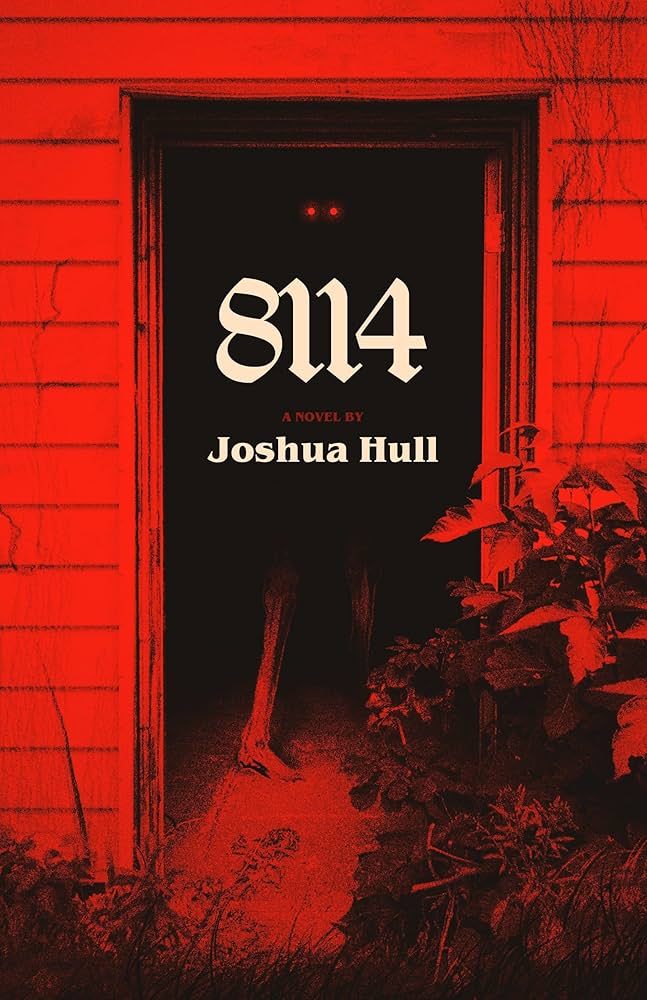
Clash has done well at helping to keep alive the horror novella and had two relatively strong examples, one a holdover from last year and one an early 2026 release. 8114 by Joshua Hull is his followup to 2024’s breakout novella from Tenebrous Press, Mouth. I didn’t love Mouth, though I could see why his quick moving plot and easy characterization worked for most readers: it seems to emerge from his moderately successful career in film and screenwriting. 8114 is largely similar, though with a much more compelling premise. A new podcaster made a show trying to track down a childhood friend who disappeared, only to be publicly shamed after that friend revealed he went underground to hide from an abusive husband and the podcast led that former spouse to murder his mother. The podcast host returns home to find a close childhood friend recently dead of suicide, his body discovered in our protagonist’s family home marked with the address of 8114. The story builds from there, an almost folk horror novella of ancestral witchcraft and persecution. The book’s mystery is well crafted and the folklore is strong, but the shifts in the story happen so quickly and the self-narration gets a little trite that I began to wonder what it would look like if it was told purely as a podcast or even if it was slowed down and expanded into a full novel. I’d generally recommend this, though I don’t know that I will continue to follow Hull’s career.
A slightly stronger effort came from Of Beasts by M. Jane Worma, which follows a small town pastor and the young man who becomes his secret lover and whom he becomes convinced is the Antichrist. The metaphor about guilt and closeted rage isn’t exactly subtle, but the story is told with a kind of desperate silence that ultimately works, and despite its short length it is long enough to go off the rails in a hauntingly splendid way. The final ten pages act as a kind of earned metaphoric hyperbole, something that ultimately tipped the book into a full tilt recommendation.
Tantrum
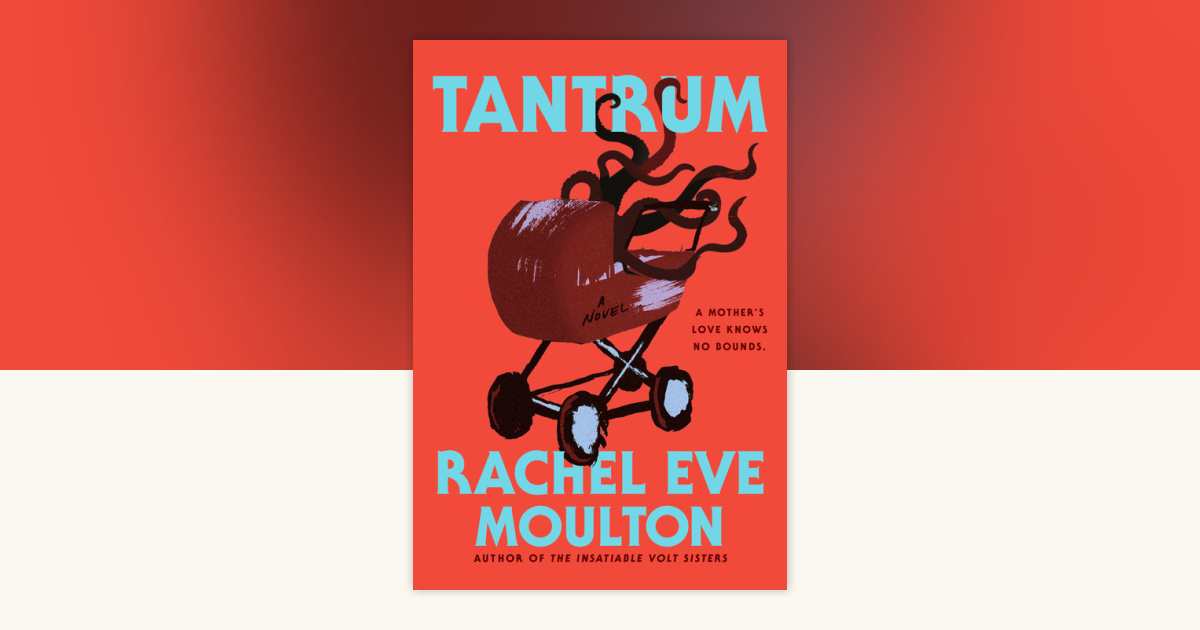
Among the best books I’ve read so far this year, but a holdover from 2025, Tantrum is a shortish novel from Rachel Eve Moulton, author of Tinfoil Butterfly and The Insatiable Volt Sisters, two books I enjoyed, that picks up on books like Night Bitch in tracking the horrors of motherhood. Told almost entirely in the internal monologue of a New Mexico desert mother, the book is her talking through her memories of her mother, the complicated feelings of subverting her career and autonomy to marriage and motherhood, and her recently born third child, a daughter who seems to want to eat everybody and everything. More than anything it is a metaphorical whirlwind through the complicated feelings we carry about our parents when we become parents, as well as the high cost of difference for children and adults alike.
The book is a comfortable and quick read that only has small traces of horror themes and is instead much more fully an examination of our own familial trauma and the ways it distorts, or helps us regain, perspective on the people we share our lives with. Molton is a lyrically precise and rather confident writer, the book is trim and clear, its metaphors are earned and its brevity is a strength rather than a shortcoming. This was the first book I started handing out to less genre-pilled readers this year, and one that I think sits along with titles like Mary: An Awakening of Terror or We Need to Talk About Kevin that externalize internal fears in particularly salient ways.
Girl in the Creek
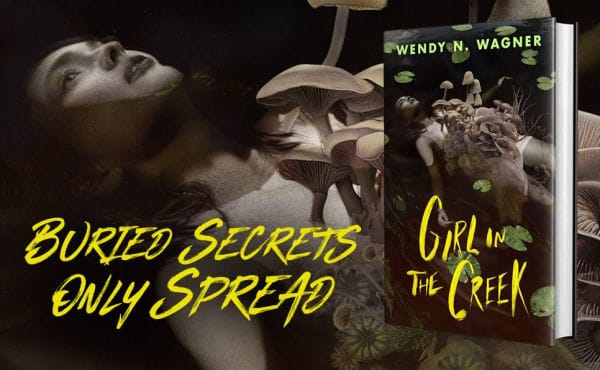
Girl in the Creek by Wendy Wagner is a book that by all rights I should have loved. It was nominated for best novel of 2025 in the Bram Stoker Awards and is written by a respected editor of Nightmare Magazine, likely the best literary horror magazine currently in print. The book itself brings a woman into Mt. Hood National Forest, a place I know well, to find her lost brother and, in doing so, builds on the deep reservoir of mystery Oregon’s still ancient forests hold. It would be insulting to call Wagner competent as a fictionist, that’s obvious, and yet the book often felt rather clunky, with language choices feeling inauthentic and much of the dialogue tired in its attempts at witticisms. Perhaps it would have worked better as a novella, or by scaling back some of the characters, and the ultimately cosmic elements felt too little, too late. This may sound like a negative reaction to the book, but I still found it a reasonably fun title, just not nearly as cutting as I had assumed it would be. This felt like the unmistakable twin of Midnight Muse, and was likely the more fast paced narrative with brightly lit characters, though I would still pick Midnight Muse.