How the Far-Right is Reacting to Trump's Assault on Venezuela
The far-right remains split on Trump's actions, and it may reveal more about the conservative civil war.
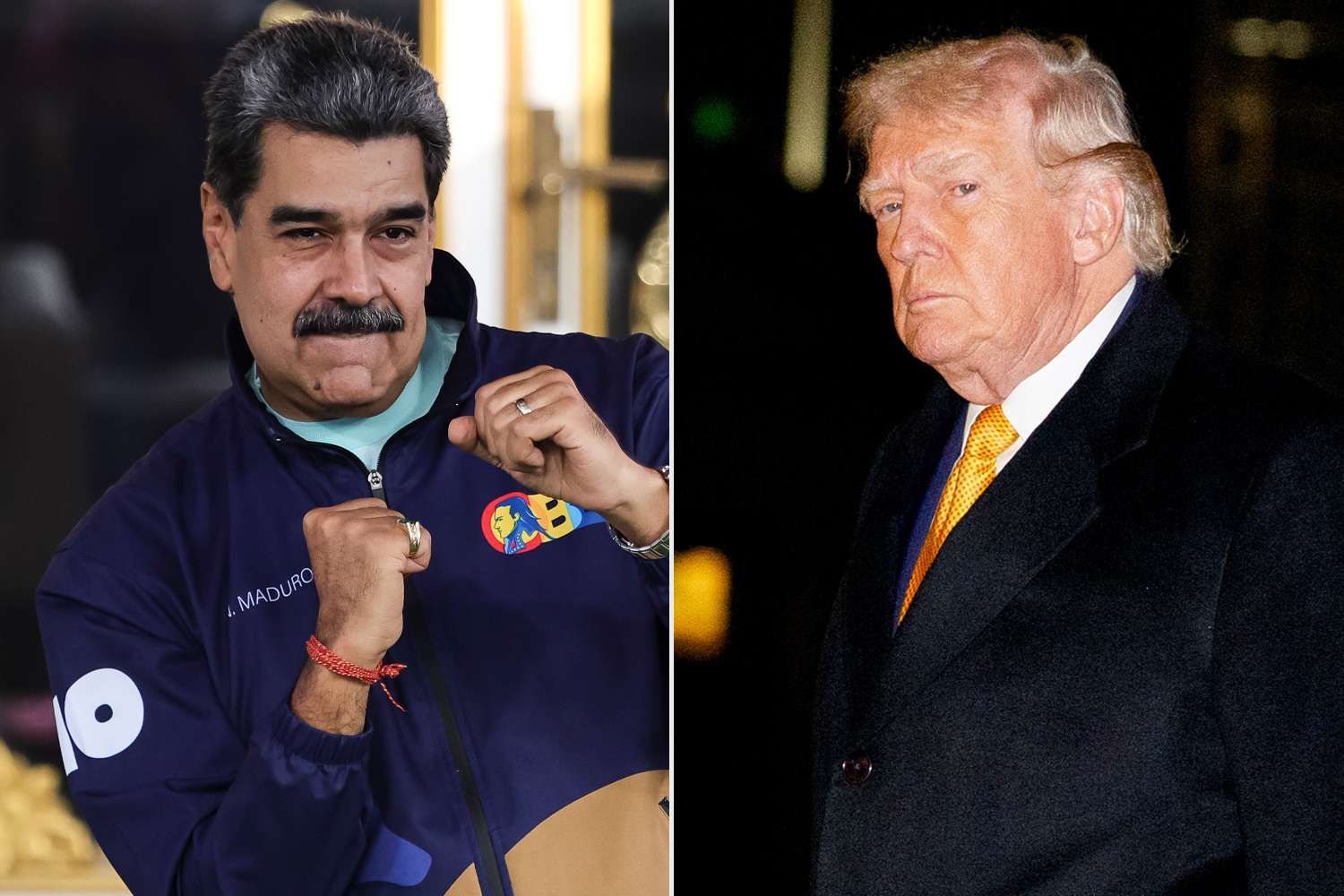
2026 began with several shocking moments of violence, including the devastating killing of legal observer Renee Goode in Minneapolis, Minnesota, which led to an escalation of protests and confrontations with ICE agents moving into communities. Just as defining of the year’s first fortnight, however, was Trump’s covert military operation in Venezuela, in which U.S. forces captured President Nicolás Maduro and transported him to the United States to face, bizarrely, charges related to drug trafficking.
For months, Trump has taken unilateral military action against Venezuelan ships, suggesting, without evidence, that they were involved in drug smuggling before bombing the vessels and killing their crews. Now, Trump has opened the year with his first major act of foreign war, even as he and his supporters insist it is merely a legal action and claim it will benefit the people of Venezuela.
While an assault like the one on Venezuela, essentially the kind of foreign war Trump campaigned against and what the national conservative and isolationist wing of the party is supposed to decry, would normally unite this element of the far right against those in power, this time the response has been far less uniform than expected. For those who were stalwart hawks on these issues, often the same figures who have maintained a consistent pro-Israel position, this moment offered a chance for their logic to return to prominence, however briefly, within the party.
The loudest among these voices was Ben Shapiro, whose primary enemy throughout his career has been socialism and who has long used Venezuela’s crippling economy and authoritarian leadership as a weapon against the left. “This is shocking in its magnitude and competence,” said Ben Shapiro in a celebratory January 6th video. “Maduro is in fact guilty… responsible for the deaths of probably hundreds of thousands of people and the exile of millions.”
Shapiro was historically not as uniformly supportive of blanket foreign wars as the neoconservatives, but he has remained far more aligned with interventionism than the MAGA and NatCon wings that have since taken over the party. He provides a justification that has been echoed across much of the far right: this was not exactly the kind of occupation the right had recently become critical of.
“This is exactly how American power should be used—decisively, clearly, and without a long-term occupation,” said Shapiro, suggesting that the targeted extraction of a president was categorically different from all-out warfare. Given that Trump has now stated clearly that the U.S. military will be active in Venezuela for years—and that even five Republicans, including Senator Rand Paul, have defected in an attempt to stop unilateral military action—Shapiro’s argument reads more as rhetoric than reality. As he elaborates further, his underlying motivations begin to resemble those that drove the invasion of Iraq in 2004. “Reopening the Venezuelan oil industry and directing it back toward the West cuts out the legs from underneath Iran and China,” said Shapiro, attempting to merge his faith in unregulated capitalism with a mercantile foreign policy.
This position was reflected across the political sphere where Shapiro has found his closest allies, particularly around his defense of Israel. The libertarian-leaning podcast The Fight Column quickly hosted celebratory conversations with a Venezuelan dissident, where the most consistent view from the hosts was openly supportive and hopeful about what might follow as foreign capital floods Venezuela’s energy market. Shapiro’s allies at Bari Weiss’ The Free Press also seized the moment as another opportunity to support Trump’s violence, reframing the action as, somehow, an act of solidarity with Venezuelans. Perhaps in an effort to make the connection explicit between support for Trump’s actions in Venezuela and support for Israel, they brought on an IDF consultant to discuss it.
“The capture of Venezuelan tyrant and narco-terrorist Nicolás Maduro is a triumph for the United States,” said former Secretary of State Mike Pompeo on Fox News, delivering one of the most expected and scripted responses of the week. And while more conspiratorial corners of the right-wing ecosystem leaned away from support, a clear exception was Laura Loomer, one of the few consistently pro-Israel voices on the far-right fringe. “We will exert our power and take the oil and financially starve the axis of evil,” said Loomer. It was likewise supported by far-right political candidate James Fishback in Florida, provided that it remains a limited action and does not become what he calls a "forever war" dedicated to country-building.
Even further to Shapiro’s right, there was support from quarters that had explicitly defined themselves around the belief that foreign wars like this one represent an assault on American (and white) sovereignty. Former Identity Evropa leader Patrick Casey, who has more recently branded himself as a MAGA patriot on his Substack and podcast, was openly supportive of the assault, arguing that it was “not just another Jewish war.” Richard Spencer, who otherwise most readily opposes Trump’s military actions, said he has “been broadly supportive of the Venezuela strikes.”
Spencer agrees with Casey that attributing the cause solely to Israel reflects a kind of frantic conspiracism, but he nevertheless expresses hesitation. He suggests—accurately—that this signals a rebalance within the party away from the Vance wing and toward establishment conservatives like Lindsey Graham. Because the action is more limited than a full-scale war, and because Maduro is both a material enemy of U.S. interests and a leader whose behavior has driven large-scale Venezuelan immigration to the U.S., Spencer sees this as a potentially reasonable test case. Still, discomfort remains, particularly around the use of foreign wars at all and the violation of another nation’s sovereignty.
That discomfort is most visible in Tucker Carlson, a leading figure in the Republican civil war over what he sees as wars driven by Israel. “What happened a few days ago in Venezuela… is the… announcement by the US government that our system is changing. That we are now explicitly an empire,” said Carlson during a January 7th conversation with Megyn Kelly.
Kelly echoed Carlson’s concern, drawing a clear ideological connection to MAGA’s supposed opposition to foreign intervention. “This idea that we’re just going to run around the globe toppling governments because we don’t like them should terrify people.,” said Kelly. “You can dislike Maduro and still recognize that this is an extraordinarily dangerous precedent.”
Steve Bannon also showed some hesitancy, saying that while it was a “stunning and dazzling overnight strike,” there was also no follow up plan. One MAGA pollster even suggested that this could be the start of a serious future problem if this does not play out as simply as Trump presents.
At the same time, a growing portion of the far-right MAGA base was openly hostile to the military action in Venezuela. “This is the same Washington playbook… that doesn’t serve the American people,” said Representative Marjorie Taylor Greene, whose recent break with Trump has allowed her to be more openly critical. This rupture stems in part from Trump’s support for Israel and his refusal to “release the Epstein files.” Greene’s fixation on the files is likely rooted in her history with QAnon-style conspiracies about human trafficking, and that same conspiratorial worldview appears to inform her rejection of the Venezuelan intervention.
The loudest and perhaps most popular voice in opposition was Candace Owens, who has become the most vocal opponent of Israel on the right from an openly antisemitic and conspiratorial vantage point. While she may genuinely oppose military violence, her objections consistently rest on conspiracy-driven interpretations of U.S. actions, premised on the belief that a secret cabal manipulates the American public for its own benefit. Owens called the action “another hostile takeover of a country” and claimed Israel was involved. She argued that while she does not like Maduro, this mirrors the assault on Assad in Syria—a war she places at Israel’s feet and one that, she says, drew Americans into violence that benefited neither them nor the Syrian people, and now not the Venezuelan people either. “We are just doing the same stupid thing over and over. Iraq, Syria, Afghanistan. No, this time we’re toppling evil! Oh, millions of civilians dead?...what happened? Oh, I know what happened. Imperialism happened,” said Owens, echoing rhetoric that would not be out of place in the broader anti-war movement and could easily be heard at Code Pink.
More openly white nationalist voices offered a simpler and more ideologically consistent opposition. “Frankly, only stupidity can explain American nationalists demanding the annexation of Mexico, Central America, Venezuela, and even the entire Western Hemisphere. No, actually, white Americans want to deport Latin Americans, not annex them. We want to be the majority in a white nation, not a minority in a brown empire,” wrote Greg Johnson, who runs Counter-Currents, one of the most influential publishers in American white nationalist and alt-right circles.
Ultimately, there was no consistent response across the spectrum, as the Venezuelan episode was interpreted through differing strategic lenses driven more by practical calculations than ideology. While Owens is pursuing a broad anti-interventionist alignment—one often sought by elements of the far right looking to build a “red-brown alliance” around multipolarity and opposition to Western hegemony—others have attempted to reclaim American imperialism after briefly criticizing it. Richard Spencer exemplifies this shift, having moved from paleoconservatism toward European New Right and Russian Eurasianist currents, historically skeptical of American excess, and now somewhat more invested in the American project. The imperial dimension appeals to him insofar as it gestures toward a grand, forward-looking white civilization with Faustian ambitions. Though often critical of MAGA’s stupidity and, at times, its cruelty, Spencer approaches these moments pragmatically, evaluating each action on its perceived utility rather than through rigid ideological reductionism.
Nick Fuentes, however, has arguably made the greatest impact. As the most prominent white nationalist in America whose ideas echo into the mainstream right, he offers ideological justifications for either position and chose decisively. “Now that Venezuela has been liberated we must send every single Venezuelan illegal, refugee, and criminal back home,” said Fuentes on X. “Take the oil, remigrate the foreigners.”
One of the central fascist anti-war arguments is that foreign wars destabilize non-white countries and thereby drive immigration into white nations. Fuentes has repeatedly made this claim in relation to Israel, arguing that Palestinian refugees should not be allowed to enter the United States because they would increase the non-white population. In the case of Venezuela, however, he argues that Maduro has already produced mass displacement, and that removing him could stabilize the country, enable remigration, and justify ending Venezuelan refugee status. Beyond this, the blunt American chauvinism on display—distinct from the “compassionate conservatism” of Bush-era interventionism—appears to resonate with younger right-wing audiences precisely because of its brazen lack of pretense.
Some on the right argue that this moment could help heal the rift that has opened over Israel and conspiracy theories, but it is likely too little and too late. More than anything, it signals that Trump is unlikely to face enough internal resistance to halt his advance in Venezuela—unless the operation escalates into open regime change, with U.S. troops installing and propping up a puppet government. If that occurs, the supposed anti-interventionism of the American far right will be put to the test, and it will become clear whether there was ever substance behind the rhetoric.