Northern Irish Racism is Loyalism's Revival
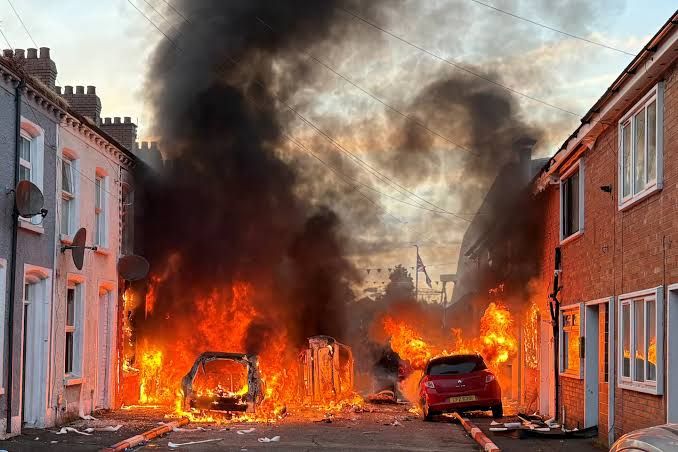
Things escalate rapidly in Belfast. But in the era of social media outrage, any politically volatile image will tear through the city in mere minutes. On June 9, a video spread of an alleged asylum seeker from Sudan standing over a white man bearing the wounds of a knife attack that ultimately left him blind in one eye. Within hours, anti-immigrant rallies appeared around the North of Ireland, followed by marches that evolved into hostile riots where immigrant homes and businesses were attacked and set on fire.1 Several homes were ultimately burned to the ground, and around five dozen fire-related incidents were reported to emergency services.2
Media outlets roundly admitted that these riots were overwhelmingly in Loyalist neighborhoods like Shankill Road, East Belfast, and Tigers Bay. Photos of the demonstrations show a sea of Union Jacks, a flag that in Belfast is used by the Loyalist political community. There were no republican tricolors in sight. The rally fliers, created and spread at lightning speed, were peculiar, including calls for businesses in the surrounding neighborhoods to close.3 This is how Loyalist paramilitaries direct—or coerce—communities under their ostensible control. The same areas where immigrants were forced from their homes and a bus was set ablaze are covered in murals celebrating balaclava-masked members of the Protestant British ultranationalists of the Ulster Defense Association (UDA) and Ulster Volunteer Force. These are assailants who earned their stripes by murdering Catholics (who mostly see themselves as Irish rather than subjects of the British crown).